TL;DR
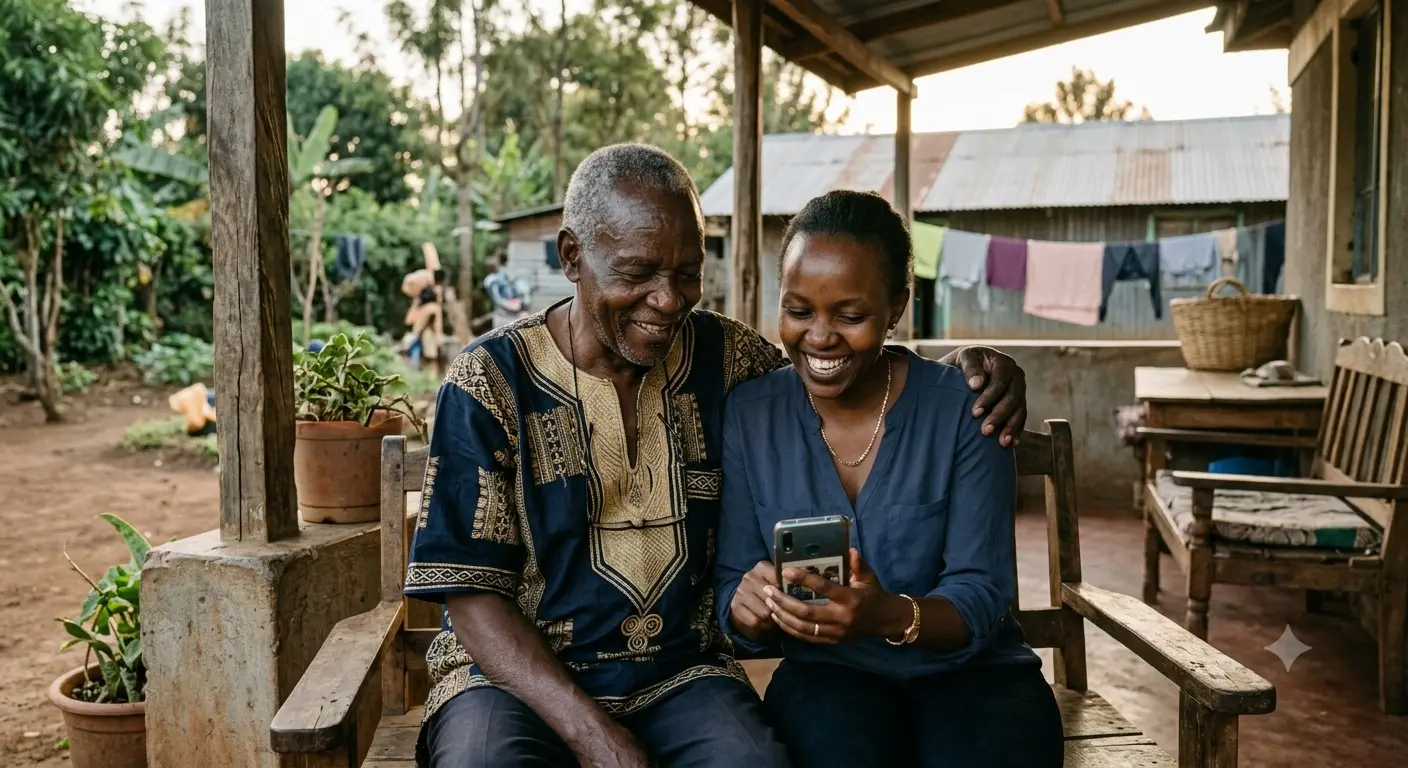
Kenya has 78.4 million mobile SIM subscriptions and 92.9% smartphone penetration — yet national internet usage sits at roughly 35% of the population (Communications Authority of Kenya, Q2 FY2025/26; KNBS 2023/24 Kenya Housing Survey), and Kenya still has no official data on internet use specifically among adults 45 and older. The infrastructure is here. The devices are here. What appears to be missing is training, trust, and tools designed for older adults.
This article draws on 30 years of data from America's Health and Retirement Study (HRS) — the world's longest-running aging survey — to argue that Kenya does not need to wait 12 years to close its senior digital divide. Senior Citizens Tech Haven was founded in Nakuru in 2024 to test exactly that hypothesis.
Read the full report
Download the complete analysis, methodology, data tables, and full source list — as a PDF.
The Paradox Hiding in Plain Sight
Here is a number that should stop every Kenyan policymaker in their tracks:
92.9% of Kenyans have smartphone access. National internet usage sits at only about a third of the population.
That is not, primarily, a connectivity problem. It looks like a literacy problem. A trust problem. A design problem.
The Communications Authority of Kenya (CA) reports that mobile money penetration hit 98% by December 2025, with 51.4 million subscriptions. Mobile broadband subscriptions reached 51.5 million. 4G subscriptions alone hit 44.2 million. 5G users consume an average of 46.4 GB per month — more than three times the 4G average of 14.1 GB.
Yet the same period's data — and the 2023/24 KNBS Kenya Housing Survey, run jointly with CA — show internet usage skewing heavily toward the young: 59.3% among 25–34 year-olds, 46.6% among 18–24 year-olds, with older cohorts consistently described as "far behind." Kenya does not currently publish an official internet-use figure specifically for the 45-and-older population — which is itself a gap worth naming out loud (more on that below). What the available data does show clearly: older Kenyans — the population facing rising chronic disease burdens, pension insecurity, and social isolation — are being left offline at the exact moment digital tools could help them most.
This is not unique to Kenya. But Kenya's story is different in one critical way: the infrastructure exists to leapfrog. What is missing is the intervention.
What America Took 12 Years to Learn — And What Kenya Can Potentially Skip
The Health and Retirement Study (HRS) at the University of Michigan has tracked approximately 20,000 Americans aged 50+ since 1992. It is the world's longest-running longitudinal survey of aging, funded by the National Institute on Aging and the Social Security Administration. Its data directly informs US retirement and healthcare policy.
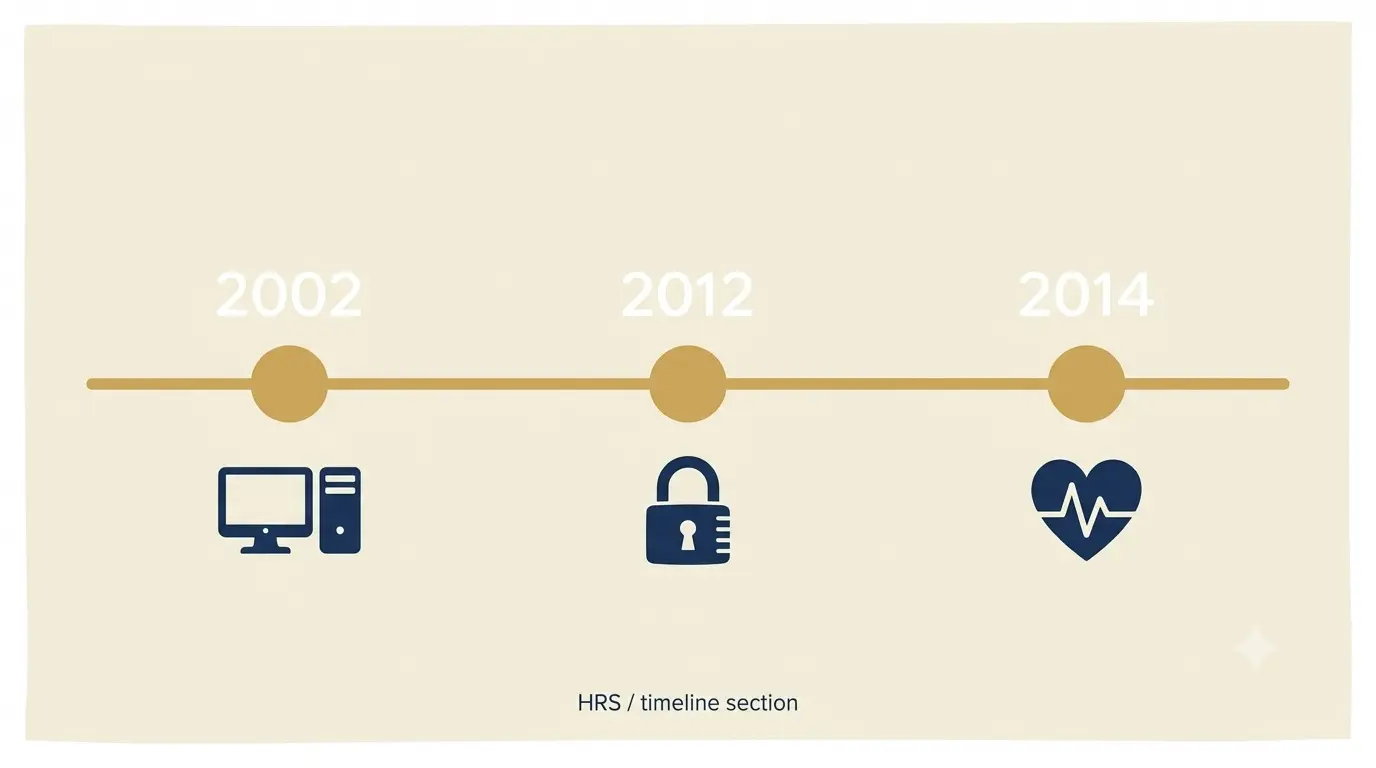
HRS ran three technology modules that map directly to Kenya's current challenge:
2002: The Baseline — "Do You Use the Internet?"
In 2002, HRS asked a simple question: Do you use the internet or email?
The answer, for most Americans over 65, was no. Pew Research Center's own year-by-year tracking shows that in 2002, just 18% of Americans aged 65+ had internet access — rising to 22% by 2003, and 25% by 2004.
The barriers were not mysterious. They are the same ones community workers hear from older Kenyans today:
- "I don't know how to use it."
- "I'm afraid I'll break something."
- "I don't see why I need it."
- "It's too expensive."
- "I don't trust it with my money."
2012: The Barrier Audit — Why Seniors Still Said No
By 2012, America had spent a decade building broadband infrastructure. Smartphones were ubiquitous. Facebook had 1 billion users. And yet HRS Module 3 — "Technology Use: Barriers and Benefits" — revealed that roughly half of Americans over 65 still remained offline (Pew's April 2012 data put the figure at 53% online, the first time it crossed the halfway mark).
The module, led by researchers Lindsay Ryan, Jacqui Smith, James Jackson, and Toni Antonucci, went deeper than previous surveys. It did not just ask if seniors used technology. It asked why not.
The barriers fell into predictable categories:
| Barrier Category | What American Seniors Said | Relevance for Kenya |
|---|---|---|
| Skills gap | "I don't know how" | Training must start at zero, not assume prior knowledge |
| Trust deficit | "I'm afraid of scams" | Cybersecurity literacy must be module one, not an afterthought |
| Relevance gap | "I don't see the point" | Training must show immediate, practical benefit (M-Pesa, WhatsApp calls, telehealth) |
| Physical barriers | "The text is too small" | Device settings and accessibility must be taught, not assumed |
| Cost concerns | "It's too expensive" | Even with 92.9% smartphone penetration, data bundles remain a perceived barrier |
The 2012 module also found something encouraging: once seniors started using technology, satisfaction was high. Email and internet users reported positive experiences. The problem was never the technology itself. It was the on-ramp.
2014: The Health Turn — When Technology Became Medical
By 2014, HRS Module 4 "Health Behaviors" documented a shift. Technology was no longer just about email and Facebook. It was about health management.
Researchers Laura Zettel-Watson and Melanie Horn Mallers asked seniors about phone calls, text messages, email, and video chats for health management; social media and health websites; mobile health apps; and brain games and cognitive training.
For each technology, HRS asked not just if it was used, but how often, for what actions, and whether health information was shared with professionals or family.
This is where Kenya's story diverges from America's and where the opportunity lies.
Kenya's Potential Advantage: The Leapfrog Moment
America took roughly 12 years (2002–2014) to move from basic internet adoption to health-integrated technology use among seniors. Kenya may be able to compress that timeline. Here is why:
1. The Devices Are Already in Pockets
America in 2002 had to build from near-zero senior computer ownership. Kenya in 2026 has 48.7 million smartphones connected — 92.9% penetration. The device access barrier appears substantially less significant than it was a decade ago, though device quality, shared ownership, and rural coverage gaps still matter.
2. Mobile Money Proved Seniors Can Trust Digital
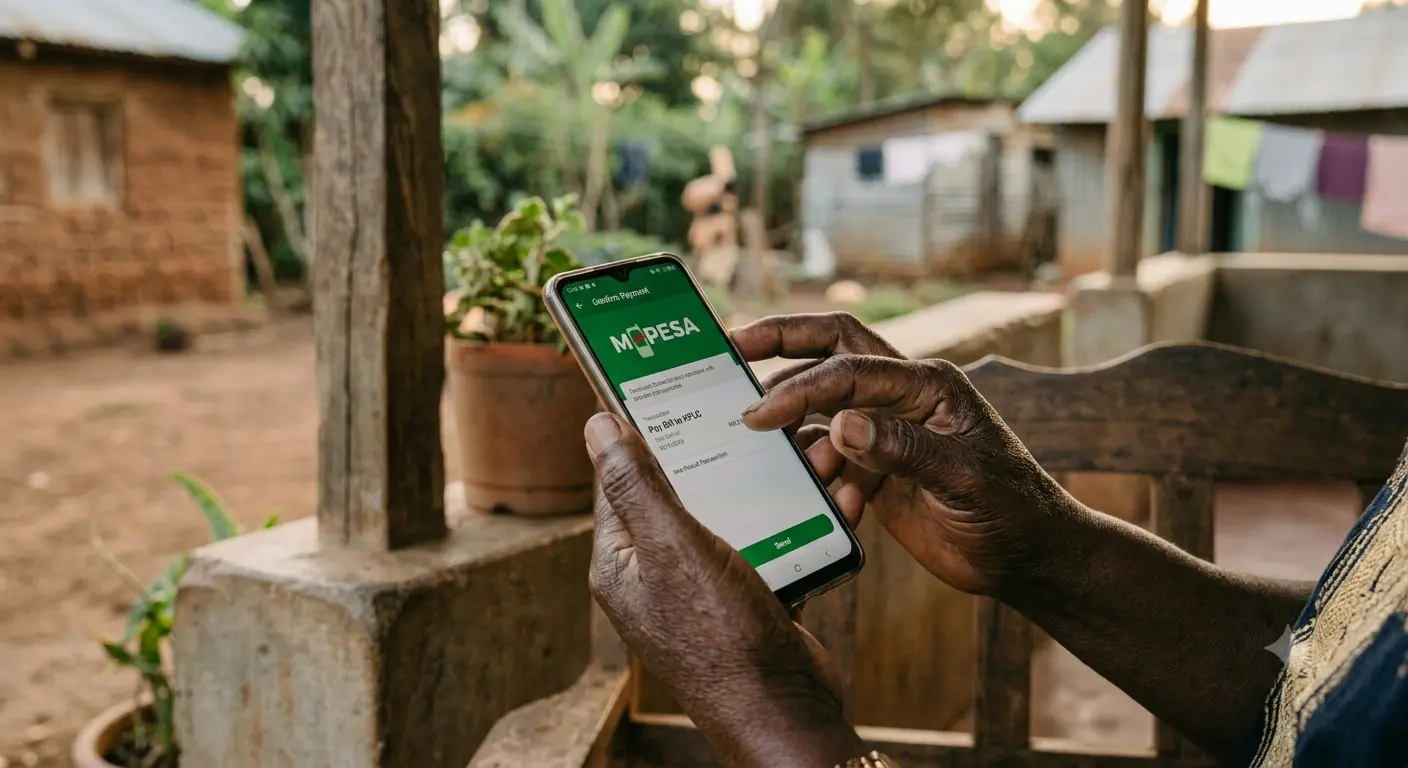
M-Pesa's 98% penetration includes millions of older Kenyans who now send money, pay bills, and receive pensions via mobile. The trust barrier has been partially breached — but only for financial transactions. The leap is to show that the same phone can manage health, maintain social connection, and access government services.
3. 4G and 5G Coverage Expands Monthly
Mobile broadband subscriptions hit 51.5 million by December 2025. 5G users consume an average of 46.4 GB per month. The network is not the bottleneck, though rural-urban disparities in quality and affordability persist.
4. Kenya's Aging Population Is Growing Fast
Kenya's National Council for Population and Development (NCPD) announced in 2025 that the country's population of older persons — currently 3.6 million — is expected to triple to roughly 12 million by 2050. The window to build digital literacy among today's 50–65-year-olds — before they become the isolated, offline elderly of 2040 — is narrowing.
What HRS Data Reveals About the Cost of Waiting
The HRS is not just a technology survey. It is a health and mortality study. And its data on social isolation is where the digital divide becomes a public health question.
HRS core variables track loneliness (measured through validated psychological scales), social network size, cognitive function, and healthcare utilization. Longitudinal HRS research has consistently associated social isolation with increased mortality risk — independent of age, income, or baseline health.
In Kenya, where multi-generational family structures are still common but urbanization is fragmenting them, the risk is acute. A 65-year-old in Nairobi whose children live in Mombasa or abroad cannot rely on daily physical visits. Their lifeline is digital — if they know how to use it.
WhatsApp calls. Telehealth consultations. Digital pension management. Online faith communities. These are not luxuries. They are survival tools — and a meaningful share of Kenya's older population does not yet have confident access to them.
The SCTH Model: Built on Evidence, Ready to Test
Senior Citizens Tech Haven was founded in Nakuru in 2024 for exactly this reason. The organization is currently in its pilot stage. Its approach is not theoretical — it is built from community engagement feedback and evidence from the world's leading aging research database.
What HRS Research Suggests About Effective Senior Tech Training
| HRS Finding | SCTH Design Principle |
|---|---|
| Barriers are psychological, not just technical | Every workshop starts with trust-building, not button-pressing |
| Health relevance drives adoption | Training shows immediate, practical benefit (M-Pesa, WhatsApp health groups, telehealth) |
| Family involvement accelerates learning | Workshops encourage grandchildren to attend as "tech buddies" |
| Repetition and patience are essential | Program designed as 4-week cycles, not one-day seminars |
| Fear of scams is a major blocker | Cybersecurity is Module 1, before any app is opened |
| Accessibility settings matter | Font resizing, voice commands, and high-contrast modes are taught systematically |
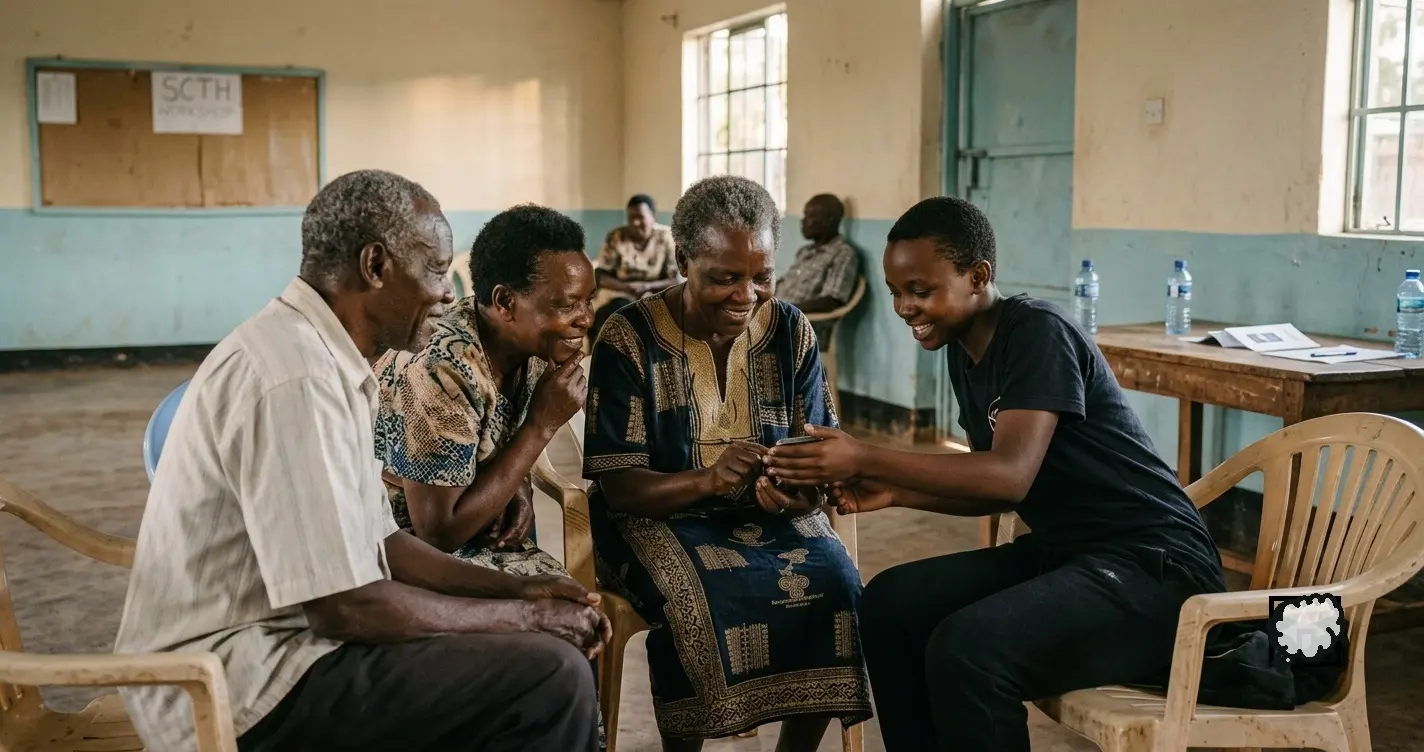
SCTH's model is built on these principles. The organization is now preparing to deliver its first structured workshops and will evaluate whether this approach can accelerate digital adoption among older adults in Kenya.
Elsah AI: Under Development
SCTH is also developing Elsah AI, a real-time digital safeguard designed to operate via WhatsApp. The system is intended to help interrupt risky actions before they happen — addressing the cognitive decline risks documented in HRS research, where memory and reasoning changes can make older adults more vulnerable to scams, misinformation, and accidental data sharing.
Elsah is currently in development. It is designed to extend training into daily digital life, not replace it.
What Policymakers Should Know
The Communications Authority of Kenya has done exceptional work expanding infrastructure. But infrastructure without literacy risks creating a two-tier society: the digitally connected young, and the digitally excluded old.
Recommended Actions
- Mandate senior digital literacy in Universal Service Fund (USF) programmes — The USF already subsidizes rural connectivity. Adding training delivery to the mandate would help close the usage gap.
- Partner with community organizations, not just telcos — Grassroots organizations like SCTH have the trust relationships that government agencies often lack. Funding them to deliver training at scale is a cost-effective intervention.
- Require accessibility standards in public digital services — Government portals, SHIF, NSSF, and e-Citizen should meet WCAG accessibility standards for vision, hearing, and cognitive impairments.
- Collect Kenya-specific aging-and-technology data — America has HRS. Europe has SHARE. Kenya has no equivalent longitudinal aging survey, and no published internet-use figure disaggregated for the 45+ population. The Kenya National Bureau of Statistics should prioritize closing this data gap.
- Regulate age-targeted digital fraud — HRS data shows scam fear is a primary adoption barrier. Stronger consumer protection for elderly digital users would likely increase adoption rates.
The Bottom Line
America spent 12 years and billions of dollars to move seniors from dial-up to health apps. Kenya has the devices, the networks, and the mobile money trust base to potentially make that same journey in a fraction of the time — if training is invested in now.
The evidence available suggests older Kenyans are not resistant to technology. They appear to be waiting to be invited in — with patience, practical relevance, and peer support.
The digital divide is not primarily a technology problem. The evidence suggests it is a training problem. And training is cheaper than infrastructure.
Kenya does not need to wait. Kenya needs to test what works — and scale what proves effective.
Frequently Asked Questions
Why don't older Kenyans use smartphones as much as younger Kenyans?
The evidence suggests the barrier is not device access 92.9% of Kenyans have smartphones. The barriers are skills, trust (especially fear of scams), perceived irrelevance, and a lack of patient, peer-supported training designed for older adults.
How can seniors learn digital skills?
Research from the HRS suggests effective training starts with trust-building, teaches cybersecurity first, shows immediate practical benefits (M-Pesa, WhatsApp calls), involves family members, and repeats over multiple sessions rather than one-day seminars.
What is the digital divide in Kenya?
Kenya has world-class mobile infrastructure (92.9% smartphone penetration, 98% mobile money adoption) but national internet usage sits at roughly 35% of the population — and Kenya does not yet publish official internet-use data specifically for the 45-and-older age group. This is a literacy and adoption gap layered on a real access gap, with older adults consistently identified as the most digitally excluded.
How does technology reduce social isolation in older adults?
Longitudinal research (HRS) associates social isolation with increased mortality risk. Digital tools — WhatsApp calls, video chats, online communities — can maintain family connections and access to healthcare, especially when physical visits are limited by distance or mobility.
What is Senior Citizens Tech Haven (SCTH)?
SCTH is a pilot-stage digital literacy initiative based in Nakuru, Kenya, founded in 2024. It builds community-based training programs for older adults and is developing an AI-powered digital safety tool (Elsah AI), using international aging research to inform its approach.
What is Elsah AI?
Elsah AI is a digital safety tool under development by SCTH. It is designed as a real-time WhatsApp-based safeguard intended to interrupt risky actions (scams, misinformation, accidental data sharing) before they happen, extending training into daily digital life.
About This Analysis
This article was produced by Senior Citizens Tech Haven (SCTH), a pilot-stage digital literacy initiative for older adults based in Nakuru, Kenya, founded in 2024 by Kevin Jonathan Otieno. SCTH is building community-based training programs and developing AI-powered digital safety tools (Elsah AI) to bridge the senior digital divide. The organization uses peer-reviewed international research to inform its approach and is committed to evaluating its outcomes transparently.
Data sources:
- Health and Retirement Study (HRS) — University of Michigan / National Institute on Aging. Public data modules: 2002 (Internet Use), 2012 Module 3 (Technology Use: Barriers and Benefits), 2014 Module 4 (Health Behaviors).
- Communications Authority of Kenya — Q2 FY2025/26 Sector Statistics Report (Oct–Dec 2025).
- Kenya National Bureau of Statistics (KNBS) & CA — Analytical Report on ICT, 2023/24 Kenya Housing Survey.
- Pew Research Center — "Wired Seniors, 2000–2004" and "Older Adults and the Internet" (2012).
- National Council for Population and Development (NCPD), Kenya — August 2025 statement on Kenya's aging population.
For media inquiries, partnership proposals, or collaboration requests, contact SCTH through our website or WhatsApp. We are actively seeking partnerships with Kenyan county governments, health facilities, faith-based organizations, and international AgeTech researchers to test and evaluate our pilot programs.